We live in a time when relationships—personal, professional, and communal—are being tested in ways we never imagined. Everywhere we turn, someone is offering a new “remedy” for restoring connection: better communication techniques, deeper self-awareness, boundary setting, emotional intelligence, forgiveness work. Each has its value, its truth, its healing potential.
But after reviewing all these remedies—after practicing, reflecting, and reaching for understanding—we arrive at a timeless truth: no remedy can take root without dialogue.
Those relationships that are incompatible are the most challenging. We have to maintain a sense of self awareness and self-respect to see a conversation through. Listen and wait your turn to respond to the topic. Don’t abruptly change the subject. We have to not be so discursive.
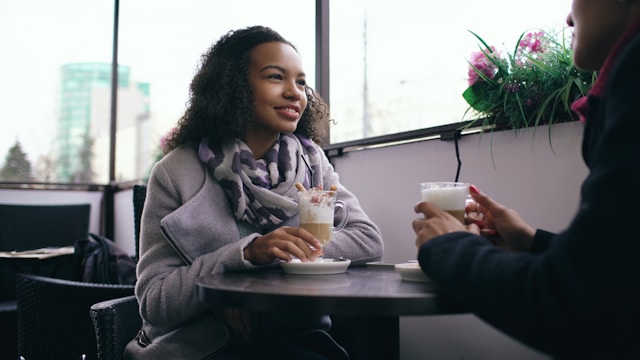
Dialogue is more than talking. It’s the willingness to listen without defending, to speak without wounding, and to stay present even when it feels uncomfortable. It’s the bridge that allows us to meet one another as human beings, not as labels, not as opponents, not as “right” or “wrong.”
We don’t have to agree on everything to walk together toward something better. Differences aren’t barriers—they’re invitations. They invite us to grow, to expand the borders of what we know, and to practice compassion in real time.
Every relationship, whether romantic, familial, or social, passes through seasons of misunderstanding. But if we can pause long enough to ask, “What truth might this person hold that I haven’t yet seen?”—then we begin to heal. That moment of curiosity is the seed of reconciliation.
So let us not give up on one another. Let us choose dialogue over distance, patience over pride, and understanding over judgment. Let us practice the courage it takes to stay at the table when the conversation gets hard, knowing that harmony is not the absence of conflict—but the presence of grace.
Because in the end, what keeps us whole is not perfection, not sameness, but our shared humanity. And when we speak to one another from that place—the place of heart and hope—even our differences can become the pathway to peace.